
“The story of production here is doing less and less and less, and waiting.” – Spencer Morris
What happens when a cidermaker stops trying to hurry cider along?
At Sowams Cider Works in Warren, Rhode Island, Spencer Morris is working with more than 70 apple varieties, making small-batch and single-varietal ciders, and giving them something that can be difficult to afford in a commercial cidery: time.

Some ciders spend a year and a half fermenting and maturing on the lees, followed by another year and a half or more in bottle before release. Many are still. Some ferment with native yeast. There are no sulfites added nor filtration or force carbonation, and Spencer’s approach increasingly comes down to doing less rather than more.
Recorded at Sowams in August 2026, where two old bench presses turned into rack-and-cloth cider presses stand proudly right inside the cidery. Also showcased in the tasting room are glass demijohns used for fermenting and conditioning – No big tanks, nor stainless steel at Sowams.
In This Cider Chat
- Why Spencer believes the story of his cider production is “doing less and less and less, and waiting”
- Growing more than 70 apple varieties in Rhode Island
- Spencer’s family connection to apple growing in New York’s Hudson Valley
- Why he grows larger trees and does his own grafting
- Picking very ripe fruit, including apples gathered from the ground
- Allowing some apple varieties to mature in storage before pressing
- Making cider with two old mechanical rack-and-cloth presses
- Fermenting and aging cider in glass demijohns
- Aging cider on the lees without routine racking
- Why some Sowams ciders may be three or four years old before release
- Still cider and why carbonation isn’t necessary for complexity
- Native versus selected yeast fermentation
- Making cider without added sulfites, filtration or force carbonation
- Blending apples at the press rather than blending finished cider
- What single-varietal cider can reveal about an apple
- Rhode Island’s historic apple varieties
- What Spencer is learning about the American cider drinker’s palate
- Why he wants cider on the wine list, not the beer list
- Serving cider closer to cellar temperature instead of ice cold
Ciders Discussed
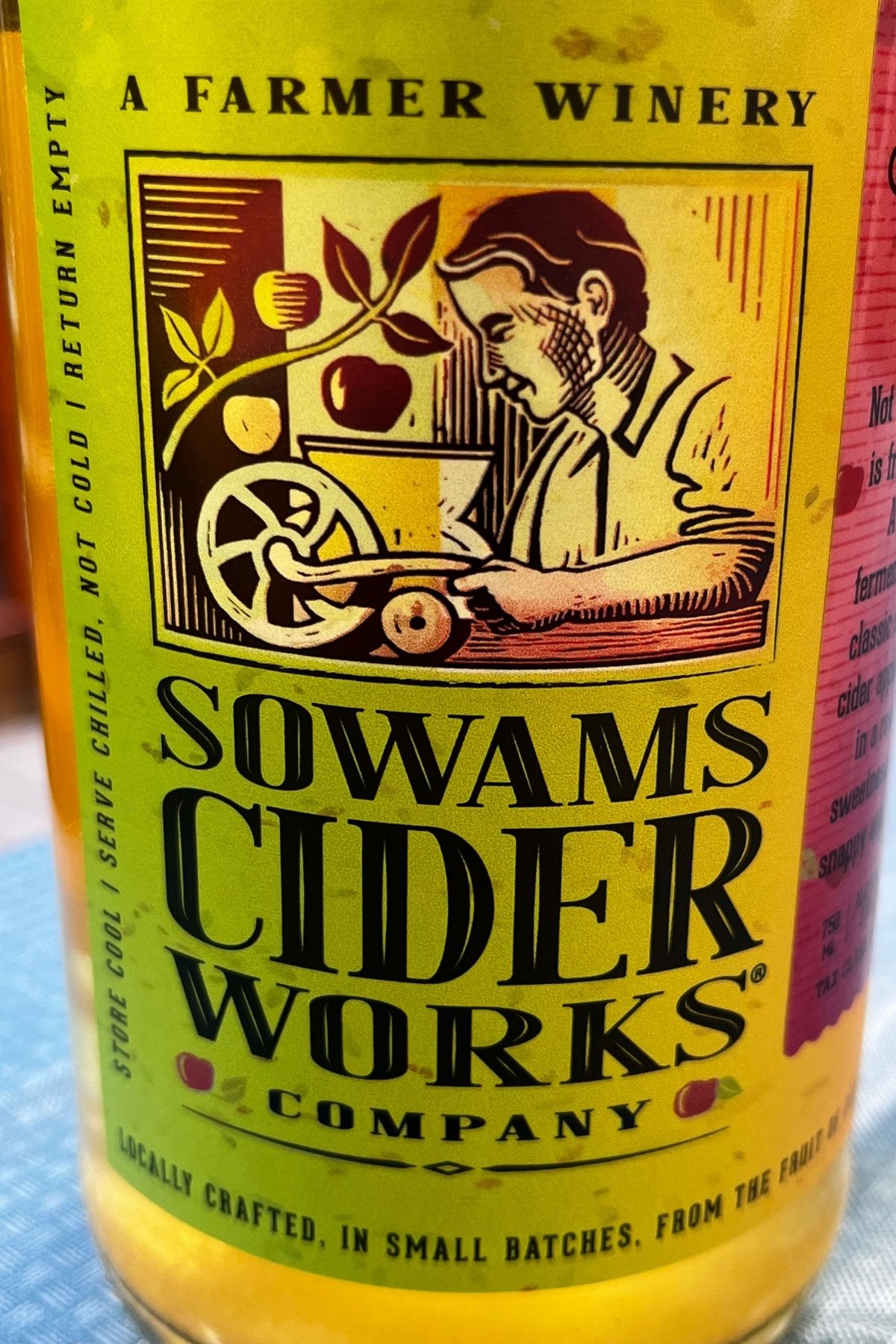
Winesap, 2023
5.1% ABV
Single-varietal Winesap. A pet nat with residual sugar balanced by the apple’s native acidity. Spencer discusses how fermentation can reawaken as cellar temperatures cycle over the years.
Orchard Blend, Batch 207
Still cider made primarily with Liberty, with Dabinett, Foxwhelp and Brown Snout contributing tannin and structure. The fruit is blended before fermentation at the press rather than as finished cider.
Rhode Island Greening, 2023
6.6% ABV
Single-varietal cider made from one of Rhode Island’s historic apples. Fermented with DV10 selected yeast and showing the distinctive character Spencer finds in the fruit.
The conversation also touches on ciders made from Baldwin, Wickson, Calville Blanc d’Hiver, Tolman Sweet, Dyer, Peck’s Pleasant, GoldRush, Major and other varieties.
Apples at Sowams
Spencer grows more than 70 varieties and continues grafting and planting. Apples discussed include:
- Winesap
- Rhode Island Greening
- Newtown Pippin
- Baldwin
- Wickson
- Cox’s Orange Pippin
- St. Edmund’s Russet
- Calville Blanc d’Hiver
- Tolman Sweet
- Dyer
- Peck’s Pleasant
- GoldRush
- Virginia Crab
- Liberty
- Dabinett
- Foxwhelp
- Brown Snout
- Major
- Harrison
- Spartan
Rather than treating these apples simply as ingredients, Spencer often ferments varieties independently to learn what each one can contribute to cider.
Doing Less and Giving Cider Time
Sowams’ production method is Spencer’s own evolving approach to cider.
Juice may spend roughly a year and a half fermenting and maturing on its lees before bottling. The cider can then spend another year and a half, sometimes longer, aging in bottle before Spencer decides it is ready to release.
He doesn’t routinely rack the cider. He doesn’t filter it or force carbonate it. No sulfites are added. Some batches ferment with native yeast and others with selected yeast.
Spencer describes the progression of his cidermaking as learning to intervene less and wait longer.
Time also begins before pressing. Depending on the variety, harvested apples may be held for weeks or even months before they reach the press. Spencer watches the fruit mature and lose water, concentrating what eventually goes into the juice.
It isn’t presented as a prescription for how cider should be made. It is the process Spencer has developed at Sowams and one that allows vintage, variety and time to remain visible in the finished cider.
Still Cider at Sowams
Still cider plays an important role in the tasting at Sowams.
Without carbonation providing another sensory element, the apples themselves have plenty of work to do. The Orchard Blend tasted during the interview brings together Liberty with traditional bittersweet and bittersharp varieties including Dabinett, Foxwhelp and Brown Snout.
Spencer also recommends resisting the urge to serve cider ice cold. His preference is approximately 45 to 50°F, allowing more aroma and flavor to emerge from the glass.
Rhode Island Apples
Spencer initially set out to find and grow historic Rhode Island varieties.
The best known is Rhode Island Greening, an apple with deep roots in the state and one Spencer uses for single-varietal cider.
He also grows Dyer, Peck’s Pleasant and Tolman Sweet, exploring how apples associated with Rhode Island and New England perform both in the orchard and as cider.
That search for individual apple character is at the heart of Sowams. Spencer isn’t adding hops, blueberries, ginger or other flavors to create differentiation. With dozens of apple varieties available to him, he sees plenty left to discover in the fruit itself.
Contact Info for Sowams Cider Works
Website: https://www.sowamsciderworks.com/
Mentions in this Cider Chat
- Renaissance Orchards, Washington State – Ria references Chris’s single-varietal cider collection and the way each apple was presented through tannin, aromatics, acidity, astringency, sweetness, and phenolics. 390: Renaissance Orchards Keeved & French Style Ciders | WA
- An Apple a Day – Cider Chat Instagram Reel series featuring individual apple varieties from the Renaissance Orchards collection. Find the series at @ciderchatciderville in the late-2024 archives. See below ⬇️
- Ben Watson Remembered: Author, Apple Advocate and Cider Ambassador – eCiderNews remembrance of Ben Watson, author of Cider, Hard and Sweet.
- Canadian Cider Is Building New Markets as U.S. Trade Uncertainty Grows – eCiderNews reporting on Cider Canada’s efforts to expand into markets beyond the United States.
- Plant the Damn Apple Tree – Ria’s eCiderNews editorial reflecting on uncertainty, cider, orcharding, and continuing to plant for the future.
- Ross Cider Festival – Held at Ross-on-Wye Cider & Perry Company in England during the first full weekend of September.
- Cider Summit Seattle – September 11–12, 2026. Use promo code CIDERCHAT-5 for $5 off your ticket.
- CiderFeast Brooklyn – October 3, 2026.
- Make the Most of a Cider Festival: Tips from the People Behind CiderFeast and Cider Summit
- Totally Cider Tours – Cider Chat’s international cider tours. Ria discusses the 2025 UK tour, the 2026 blossom-time UK tour, and the upcoming France cider tour.
- Still Cider at eCiderNews – Ria references a recent eCiderNews story exploring still cider and why cider does not need carbonation to be compelling.
- Cider Going Up Campaign – Meet the commercial patrons supporting Cider Chat and learn how to become a patron at CiderChat.com.
- EsoTerra Ciderworks, Durango, Colorado – Featured Cider Chat commercial patron. EsoTerra produces cider and wine from its orchard and vineyard in southwest Colorado.



You must be logged in to post a comment.