
By Ria Windcaller | eCiderNews
CRESTLINE, California — In the San Bernardino Mountains of Southern California, Richard Krumwiede is expecting nearly 20 tons of apples this year from orchards where some of the trees have been standing for roughly a century.
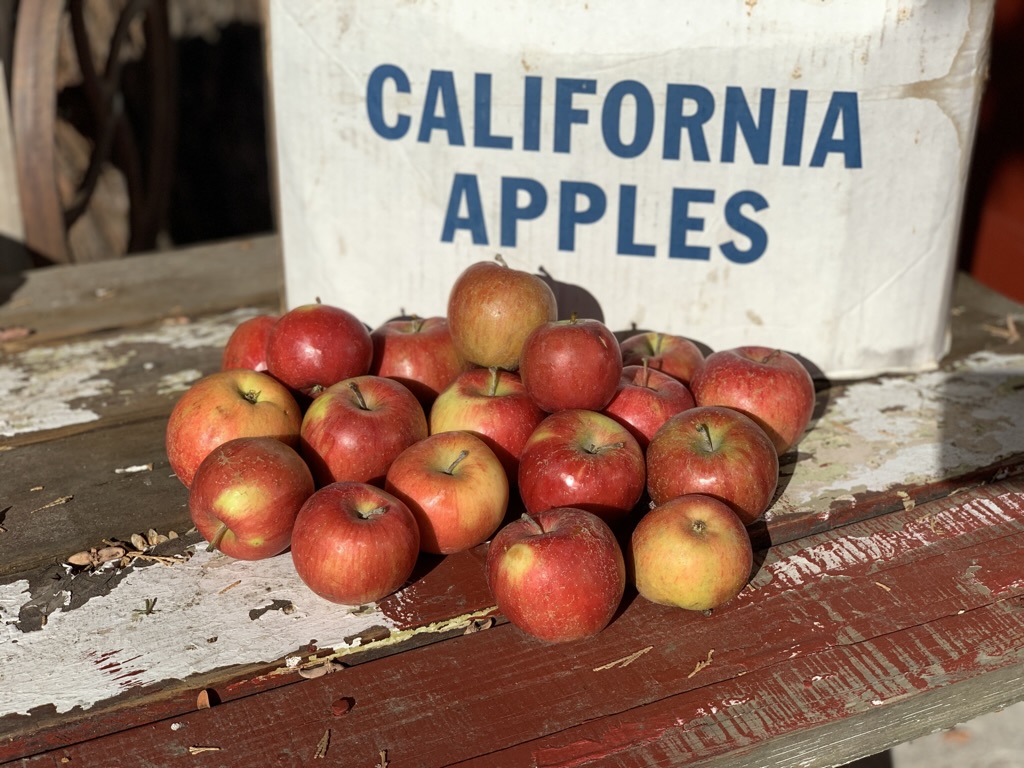
But the 2026 harvest at Sycamore Ranch Winery & Cidery is about more than tonnage. It marks another step in Krumwiede’s effort to restore historic mountain orchards while gradually introducing cider-specific apple varieties, apples grown for the tannins and acidity they bring to cider rather than for eating fresh, that can shape what the cidery produces for decades to come.
Sycamore Ranch now farms approximately 450 apple trees across 4.5 acres of orchard at about 4,600 feet elevation. The cidery owns two orchards and farms two additional properties in exchange for their fruit.
Krumwiede believes Dart Canyon once contained more than 100 acres of orchards planted with heirloom apples. Much of that agricultural landscape has disappeared as abandoned orchards were overtaken by forest or removed for homes.
What remains includes some remarkable survivors.
Among Sycamore Ranch’s century-old trees are Virginia Hewes, Newtown Pippin, White Winter Pearmain, Arkansas Black, Northern Spy, Hawkeye, Virginia Winesap and Rome Beauty.
When Krumwiede and his wife, Elizabeth, acquired the properties, the orchards needed substantial rehabilitation. Trees had gone perhaps 20 years without pruning, some suffered from heart rot, and at least half of the original orchard spaces were missing trees.
The first task was restoration: removing dead and damaged wood and clearing pines and oaks that had moved into the old orchard blocks. Krumwiede brought another perspective to that work as well. Before focusing on Sycamore Ranch, he was the founder and president of an Inland Empire landscape architecture firm, giving him decades of experience working with landscapes and long-term planting projects.
Even in that condition, the surviving trees were producing between eight and 12 tons of apples annually, which Sycamore Ranch used for blended dry ciders.
Building a Cider Orchard Within an Old Orchard
Beginning in 2018, the Krumwiedes installed drip irrigation and developed an on-site nursery. There, they propagated new trees by grafting scionwood, young cuttings taken from an existing tree, from the surviving heirloom trees as well as from cider-specific varieties onto M.111 rootstock, the root system the new trees grow from, selected in part for its drought tolerance and suitability to their soils.

Replanting began in 2020 and continues today.
Sycamore Ranch now grows 22 apple varieties plus quince. Alongside the historic apples are varieties including Dabinett, Wickson Crab, Ashmead’s Kernel, Golden Russet, Roxbury Russet, Kingston Black and Porter’s Perfection, apples cultivated specifically for cider rather than for eating out of hand.
The objective isn’t simply to grow more apples.
Krumwiede wanted fruit that would allow Sycamore Ranch to make cider in which the apples themselves provide more of the structure.
“Having all of these varieties to work with allows us to be more apple centric in our cider making,” Krumwiede told eCiderNews, pointing to the natural tannins, acids and phenolics, the compounds that give cider its bitterness, tartness and depth of flavor, that the fruit can contribute to traditional, complex dry cider.
That is beginning to happen.
About 19 tons of this year’s expected crop will still come from the century-old heirloom trees, but the five-year-old cider trees are becoming increasingly important.
Two years ago, there was enough fruit from the younger trees to make a five-gallon experimental batch blended with Newtown Pippin. Last year, there was enough for a 60-gallon barrel.
This year, Krumwiede expects at least two 60-gallon barrels, enough for approximately 50 cases.
The cider already has a name: Future + Past.
The name neatly describes the orchard itself: fruit from newly planted cider varieties fermented alongside apples from trees that were growing in Dart Canyon generations before Sycamore Ranch existed.
Learning What Grows at 4,600 Feet
Planting well-known cider cultivars doesn’t guarantee they will thrive everywhere.
Most of Sycamore Ranch’s newer varieties have performed well in the property’s high-elevation, four-season climate. Krumwiede says Dabinett, Puget Spice and Kingston Black have been less vigorous, although they are producing fruit. He suspects the decomposed granitic soils, loose, sandy soil that drains quickly and holds fewer nutrients, may be a factor.
Puget Spice may eventually be replaced by Foxwhelp, which is growing successfully nearby.
That process of observation and adaptation is becoming part of the cidery’s next chapter.
Sycamore Ranch currently has roughly 12 to 25 trees of each of its newer cider varieties. As individual cultivars begin producing one to two tons of fruit, Krumwiede plans to ferment some separately, making single-varietal ciders from just one apple type rather than blending several together.
Those trials will help determine which apples have enough character to become single-varietal ciders and which are better used alongside the old orchard fruit in blends.
The 2026 crop should provide plenty of material for that continuing experiment. Krumwiede reports exceptional fruit quality, with medium to heavy fruit set on both young and old trees. Some thinning was necessary to protect the trees and improve the remaining fruit.
An Orchard-Based Cidery
Sycamore Ranch is unusual in another respect: its cider has always been made entirely from fruit it grows.
The exception is one to two tons of locally sourced pears each year, which are co-fermented with a portion of the ranch’s apples.
As the century-old trees continue to decline, Krumwiede expects to replace them with more cider-specific varieties, particularly in spaces now occupied by Rome Beauty.
Eventually, he believes the restored and replanted orchards could produce about 30 tons of apples in a good year.
That could make Sycamore Ranch not only a source of its own cider but also a source of cider fruit for others.
The ranch has a professional plate-and-frame press along with an apple washer, elevator and grinder, giving it the capacity to process a little more than a ton of fruit per hour. As production increases, Krumwiede would like to sell apples or fresh-pressed juice to other cideries, wineries and home cidermakers.
For Krumwiede, however, the accomplishment goes beyond production numbers.
“I’m really proud of resurrecting these historic orchards,” he said, noting that Sycamore Ranch is one of the few remaining agricultural farming businesses on the mountain.
The old trees won’t live forever. But through restoration, grafting and new plantings, some of the cider history contained in those orchards is moving forward.
At Sycamore Ranch, the future of cider is quite literally growing alongside its past.
🎙️ Hear More From Richard and Elizabeth
Richard and Elizabeth Krumwiede shared more about their story and the work behind Sycamore Ranch’s mountain cidery on a recent episode of Cider Chat, recorded during the UK Blossom Time Totally Cider Tour. Their segment, “Richard and Elizabeth’s Mountain Cidery,” begins at 32:28 — click below to jump straight there.
Stay Connected
🍎 Subscribe to the eCiderNews™ newsletter
🎙️ Listen to the Cider Chat podcast
📬 Send story tips to news@ciderchat.com
eCiderNews
Fresh Cider News, Straight from Ciderville
Published by Cider Chat



You must be logged in to post a comment.